Kepler Nav Research - Lie Group Manifold Observability Proof & Whitepapers
Fundamental observability of autonomous navigation without external infrastructure
Authored by Sanjay S (Researcher at Kepler Nav), this publication establishes the mathematical framework of non-linear state observability on the SE(3) x R³ Lie Group manifold.
Full state recoverability under gravity
Sub-millisecond matrix updates
Zero drift divergence
Technical credibility before marketing.
Ground-truth evidence, rigorous mathematical theorems, and custom FPGA silicon architecture - built on decades of institutional pulsar research and space-grade verification.
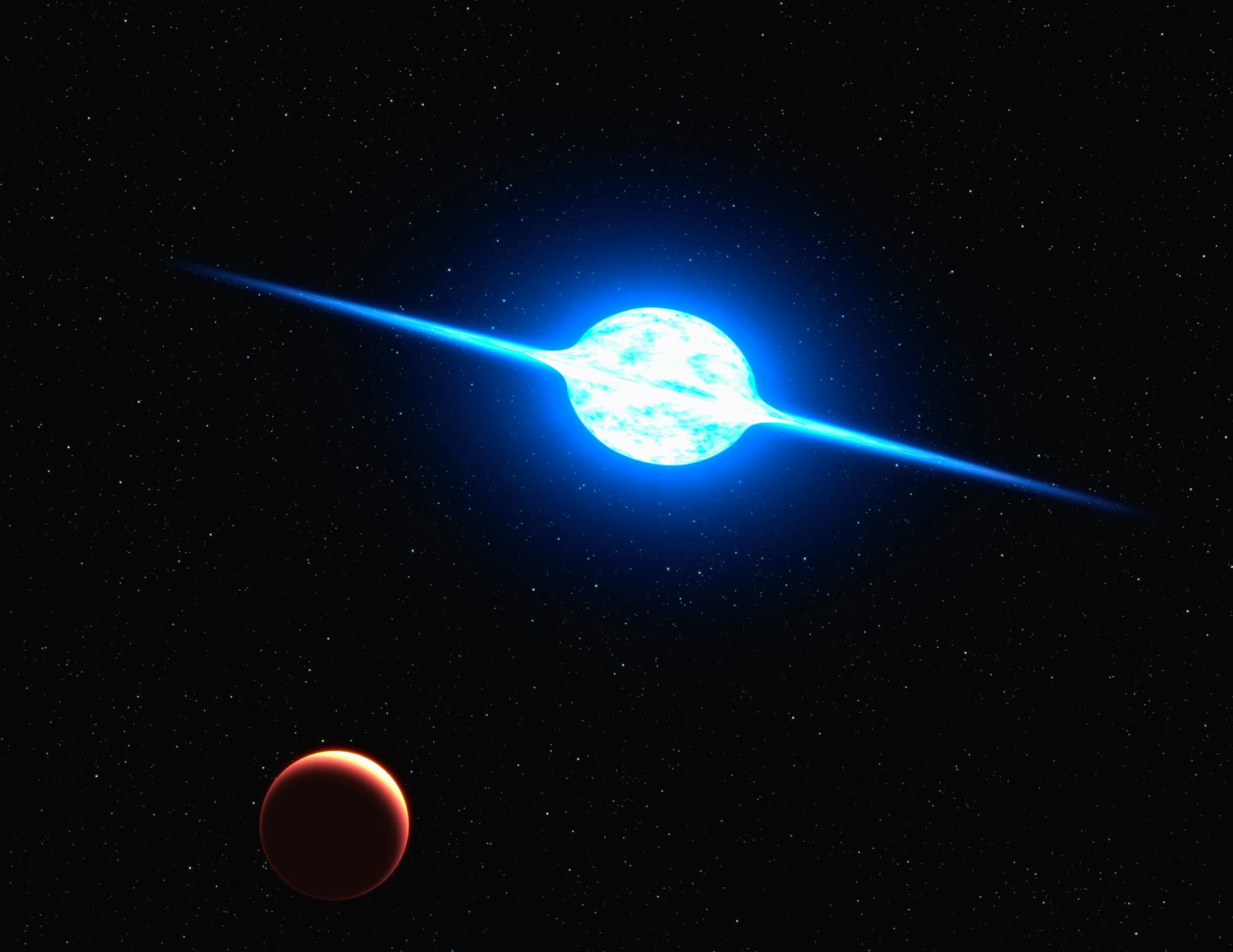
Inspired by decades of celestial & pulsar timing research
Building upon foundational orbital mechanics and pulsar navigation studies pioneered through NASA's SEXTANT mission on the ISS. We transformed photon-counting timing principles into a real-time 100 Hz Lie Group manifold architecture.
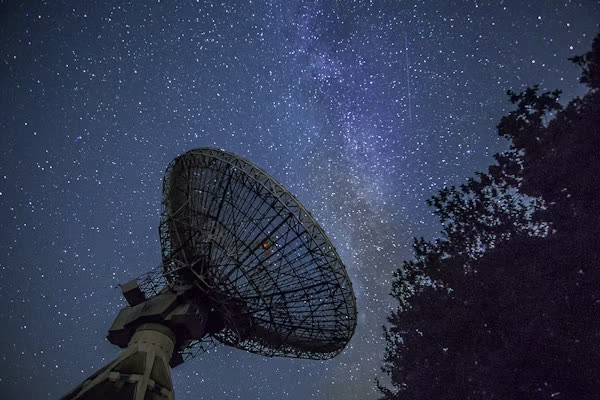
Fundamental observability of autonomous navigation without external infrastructure
Establishes the rigorous mathematical proof of 6D non-linear state observability on the SE(3) x R³ manifold. Proves continuous Lie derivative time evolution recovers full 6D observability.
Under central gravity fields, continuous Lie derivative time evolution recovers full 6D state observability rank(O) = 6.
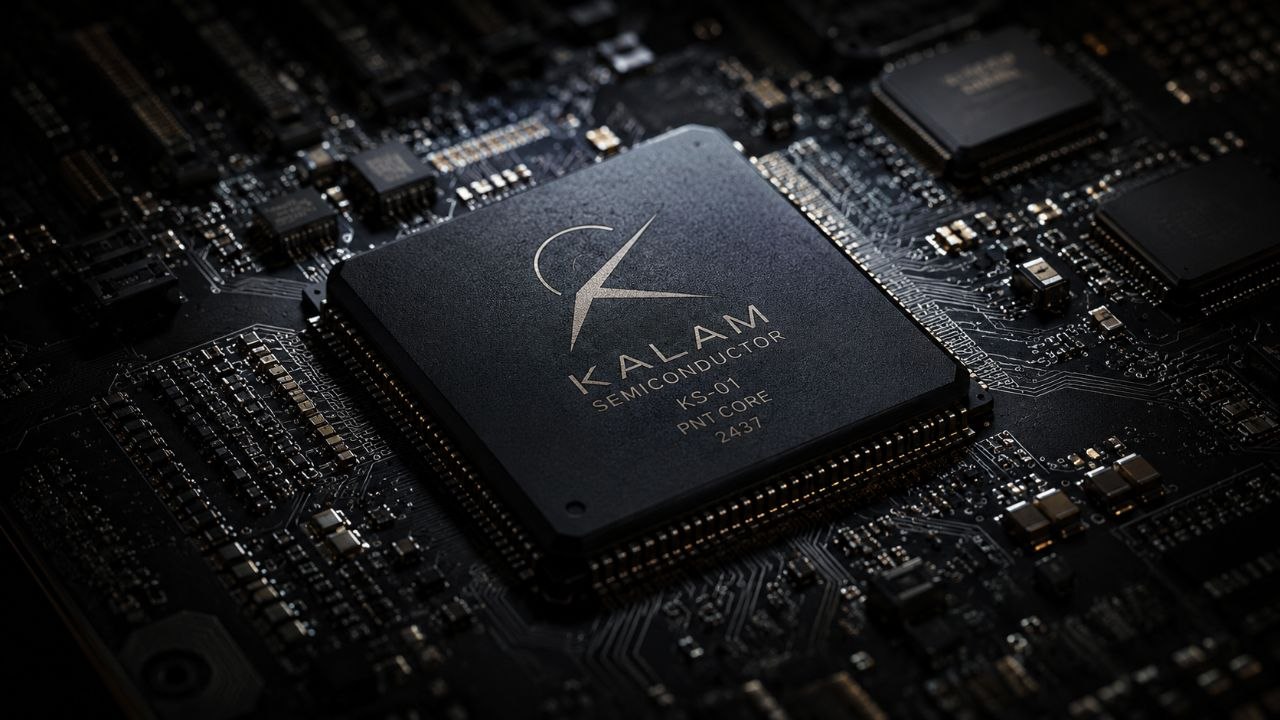
Custom FPGA silicon matrix acceleration
Proprietary hardware netlist performing parallel sparse Cholesky elimination on AMD/Xilinx Zynq UltraScale+ MPSoC. Accelerates Factor Graph Optimization by 50x under 1.5W power.
From theoretical proof to orbital deployment.
Theoretical research & Lie algebra proofs
Published IEEE observability research proving non-linear 6D state observability on SE(3) x R³ manifold without external GNSS signals.
Software engine & iSAM2 optimization
Developed C++ UNIF-PNT software core executing invariant filtering and real-time Lie derivative rank calculation.
Kalam silicon netlist & hardware-in-the-loop
Synthesized custom FPGA hardware sparse Cholesky elimination solver, achieving 50x acceleration under 1.5W.
Kalam-Zero 1U payload bench testing
Assembled Kalam-Zero 1U CubeSat / UAV payload pod with SA.45s CSAC clock, ADIS16497 IMU, and AD9361 SDR.
Cislunar demonstration mission
Scheduled satellite flight mission verifying autonomous orbit determination and XNAV pulsar timing.
Deep space mission deployment
Deployment of Kalam ASIC silicon and XNAV payloads for Cislunar orbiters, Lunar Gateway, and interplanetary probes.
Build with Kepler Nav.
Partner with our engineering team to integrate the UNIF-PNT navigation engine or deploy Kalam-Zero payloads for satellite and defense platforms.